
Role
Associate Director, UX
Scope
- Led UX for AIR MILES – a high-traffic consumer loyalty platform – focused on redesigning and improving the experience in the Travel & Offers programs
- Designed core booking and search flows used by millions of loyalty members
- Partnered with Product, Engineering, Analytics, and Marketing
- Led & mentored team of 4 designers
Impact
Delivered a revitalized travel experience serving ~1M monthly visitors, sustained through and beyond company-wide restructuring.
Improved booking flow completion by addressing high drop-off moments identified through analytics and usability testing
- Clarified complex rewards offers and pricing logic, reducing user confusion and increasing comprehension of offers by 56% at key decision points in the flow
- Shifted product decisions toward evidence-based design, using research and experimentation to challenge assumptions and focus effort where it mattered most
1. Travel Experience Portfolio
Strategic Problem
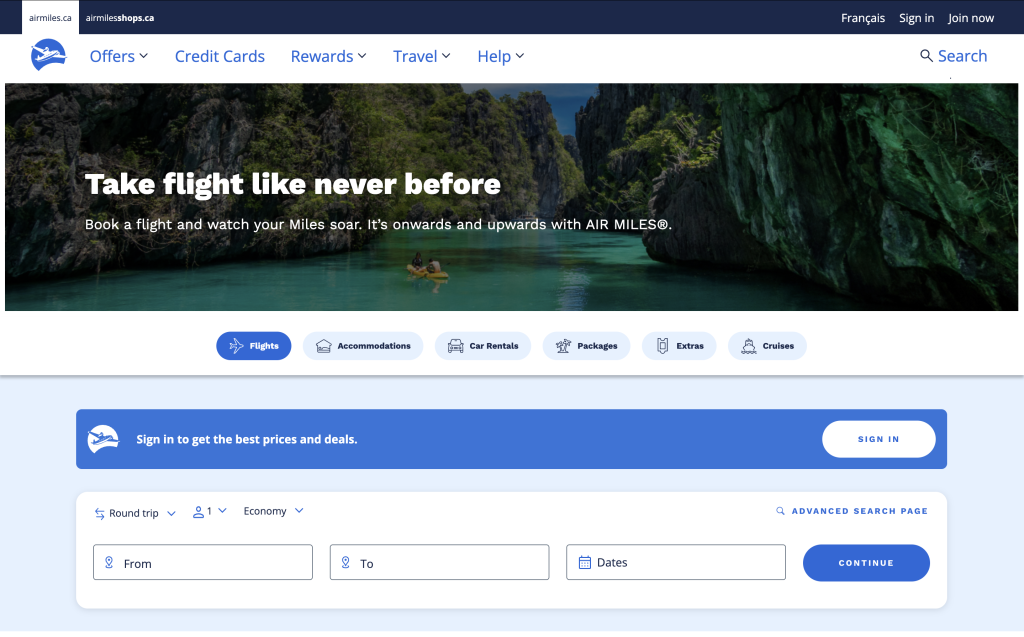
By early 2022, AIR MILES Travel had become a marquee benefit, but the experience was inconsistent and difficult to navigate. It spanned multiple vendor platforms, each with different interfaces, booking flows, and rules. This fragmentation created confusion, increased drop-off, and positioned AIR MILES as a secondary option for travel bookings.
At the same time, upcoming vendor decisions required a clear point of view on the future experience — specifically, which partner could support the desired direction.
Baseline signals highlighted the risk:
- 62% of collectors browsed AIR MILES Travel, but only 3% completed a booking
- 60% drop-off for unauthenticated users
- 67% did not consider AIR MILES their first choice for travel bookings
Leadership needed to improve clarity and trust, reduce friction, and define a scalable experience vision — without redesigning the loyalty model or adding operational complexity.
My Role & Strategic Decisions
As Associate Director of Experience Design, I led experience strategy for the Travel portfolio, partnering with product, marketing, research, and technology leaders.
My role centered on strategic influence, not final enterprise authority — shaping direction, aligning stakeholders, and guiding teams toward clarity-driven outcomes.
Key strategic decisions:
- Reframed the challenge from “improving a booking engine” to a customer trust and comprehension problem
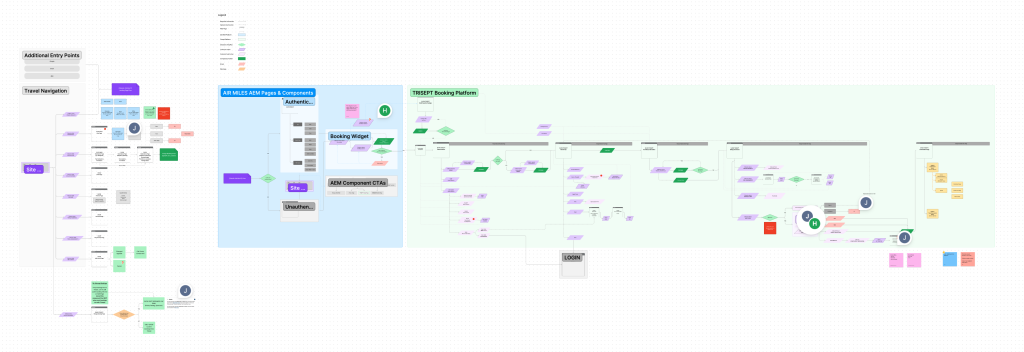
- Advocated for a unified end-to-end journey, regardless of underlying vendor
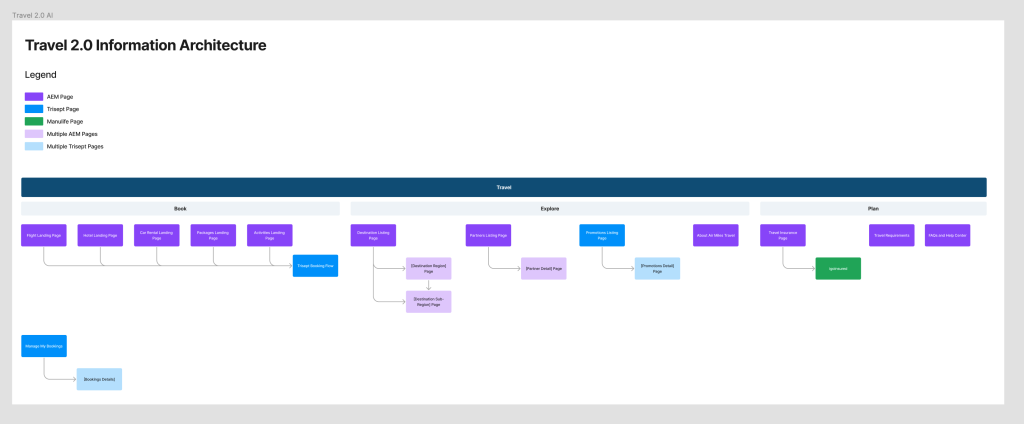
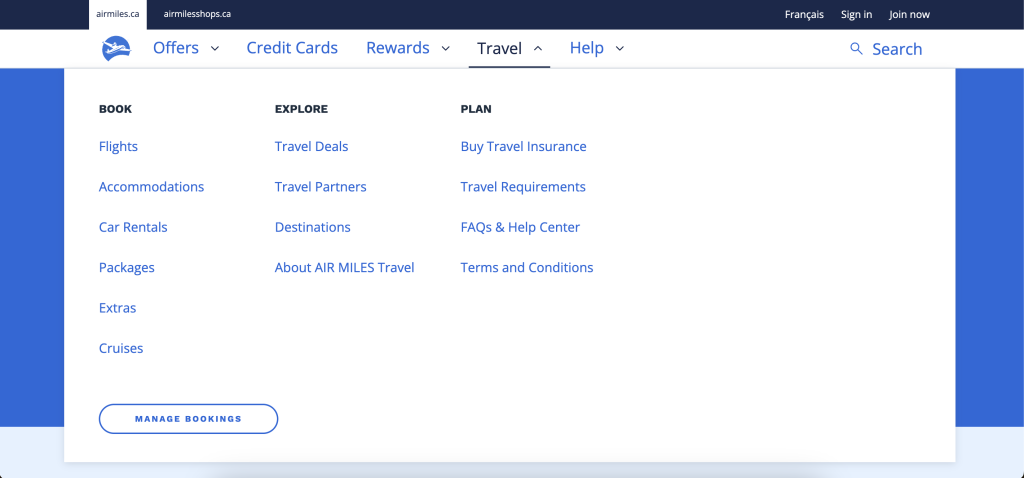
- Prioritized simplification of information architecture, language, and decision points over net-new features
- Established a shared experience vision to support phased delivery and upcoming vendor transitions
Strategy & Approach
Within the Travel portfolio, we treated comprehension as a design constraint. Instead of optimizing isolated touchpoints, we focused on how collectors understood value across the full journey, especially at moments where uncertainty had previously led to abandonment.
This approach aligned cross-functional teams around:
One cohesive booking journey
- Clear articulation of points, cash, and trade-offs
- Reduced friction for unauthenticated users
- Experience principles designed to scale across vendors
In parallel, I facilitated alignment through:
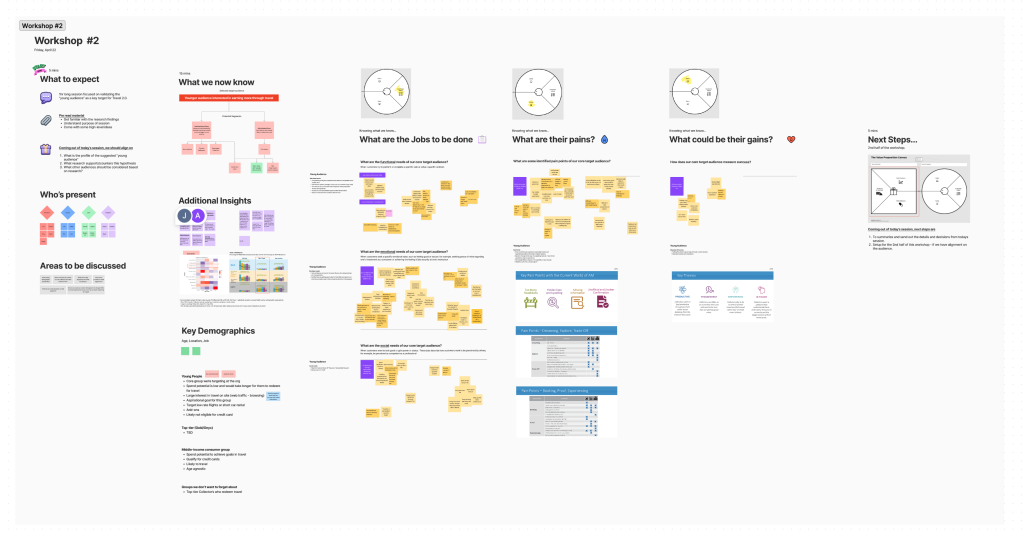
- Value-definition workshops with product, marketing, and technology
- Clear OKRs and MVP scope tied to user understanding
- Embedded designers within agile squads to strengthen trust and execution
Outcomes & Impact
User Impact
- Reduced confusion at key booking decision points
- Improved understanding of travel value and options
Business Impact
- Clear, documented experience direction to support vendor renegotiation
- Foundation for improved conversion and margin through phased rollout
Organizational Impact
- Stronger alignment across product, marketing, and technology
- Shared experience language for future Travel initiatives
What Scaled Beyond This Work
The unified journey principles, documentation, and experience vision created a reusable foundation for future travel integrations and vendor transitions, reducing long-term risk and rework.
2. Offers & Shops Experience
Context
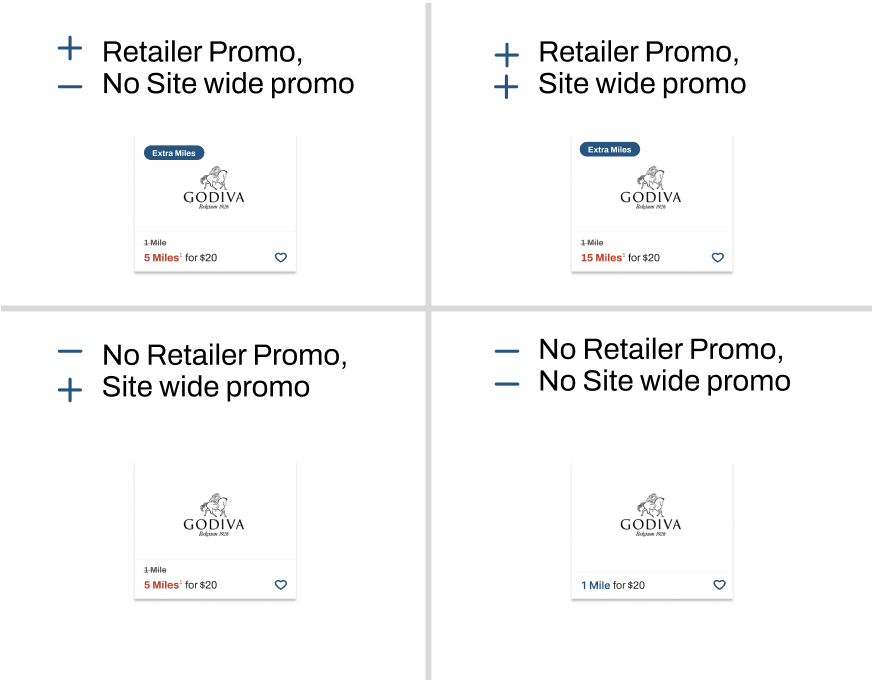
Separately from Travel, analysis of AIR MILES Shops revealed significant comprehension gaps in promotional offer cards, particularly around stacking rules, multipliers, and restrictions. Customers often misunderstood value, leading to hesitation or missed engagement opportunities.
Mandate
- Directed experience improvements across Offers & Shops
- Partnered with marketing, analytics, and product teams
- Guided designers on clarity, hierarchy, and decision-making cues
Strategic Focus
- Treat comprehension as the primary success metric
- Simplify offer anatomy and visual hierarchy
- Reduce cognitive load at high-velocity decision moments
- Align experience clarity with marketing intent
Outcomes
- 56% increase in customer comprehension
- Clearer understanding of promotional mechanics
- Stronger alignment between design and marketing outcomes
What Scaled
The redesigned offer framework and clarity principles influenced future promotional experiences, improving consistency and decision confidence across Shops.